
🔎 Disclosure: Heads up, babe: some links here are affiliate links, which means you might throw a tiny commission my way if you buy (zero extra cost to you). Only things you’d actually use and love get shared on this site.
What Stops Happening After This Article:
- Money stops leaking into storage bins and duplicate items
- Time spent re-cleaning the same space goes down each week
- Fewer items get rebought because you know what you own
1. Buying Storage Bins Before Getting Rid Of Anything
That cute row of bins looks productive, but stuffing clutter into containers just hides the problem and costs extra cash.
Start This Way: Clear one shelf fully first and count what actually stays before buying a single bin.
It will be so much easier if you use Capital One Shopping to compare prices before buying new organizers.
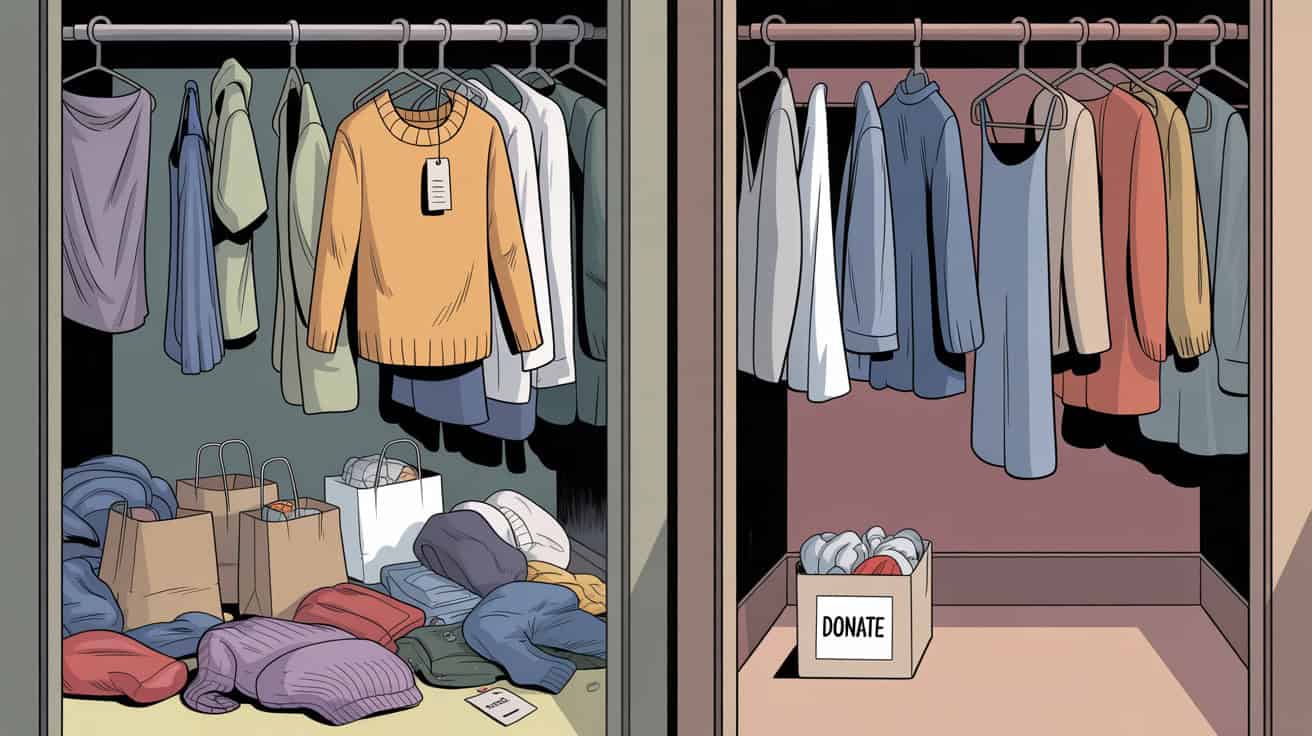
2. Keeping Clothes That Do Not Fit Just In Case
Closets packed with “maybe one day” outfits block space and push you to shop for pieces you already sort of have.
Here’s What To Do: Pull out anything that has not fit in 12 months and place it straight into a donate bag today.
This gets easier if you use Rocket Money to see how much clothing spending adds up each month.
3. Moving Clutter From One Room To Another
Shifting piles from the kitchen to the bedroom feels busy but keeps the mess alive.
Instead, Try This: Pick one item in your hand and decide trash, donate, or keep before walking away.
This feels easier if you use a large trash bags box to toss obvious junk fast.
4. Saving Broken Items To Fix Later
That cracked lamp and wobbly chair quietly eat up space and never get repaired.
The Easy First Step Is: Ask if the repair will happen this week, and if not, let it go today.
It will take less time if you use Insurify to compare home insurance before replacing expensive broken items.
5. Holding On To Gifts Out Of Guilt
Unused gifts sitting in drawers waste space and often lead to buying more storage to hold them.
Here’s A Gentle Way To Start: Keep one meaningful gift and donate the rest without overthinking it.
You could keep it simple if you use a cardboard donation box set to gather items in one place.
6. Storing Papers Without Sorting Them First
Stacks of random papers turn into paid late fees because bills hide in the pile.
To Avoid Feeling Overwhelmed: Sort into 3 piles only—trash, action, keep—and handle the action pile first.
This takes less time if you use a simple file folder organizer to separate papers clearly.
7. Keeping Duplicate Kitchen Tools
3 spatulas and 4 can openers fill drawers and make it harder to find the one you actually use.
The Most Doable Way Is: Keep your favorite one and place the extras straight into a donate bag.
You can make this easier to finish if you use a drawer divider set to limit space on purpose.
8. Renting Storage Instead Of Letting Things Go
Paying monthly for items rarely used drains money year after year.
Consider This: Add up 12 months of storage fees and decide if the items are worth that total.
You can make this less hard if you use a Betterment Cash Reserve Account to move that saved storage money into savings.
9. Throwing Everything Away Without Checking For Value
Some items tossed in a rush could have been sold and turned into quick cash.
Give This A Try: Scan electronics or brand items for resale value before tossing them out.
You could get it done faster if you try a phone barcode scanner app to check prices quickly.
10. Starting In The Hardest Room First
Beginning with the garage or attic often leads to burnout before real progress happens.
Here’s A Small Step That Helps: Start with one small drawer so you see a win in under 15 minutes.
This is faster when you use a timer cube to limit the session and avoid burnout.
11. Saving Freebies And Samples You Never Use
Tiny hotel shampoos and random samples pile up and push you to buy organizers for junk.
One Easy Reset Is: Gather all samples in one bowl and keep only what you will use this month.
You can make this easier if you use a clear plastic storage bin to see exactly how much you have.
12. Buying Organizing Products Without Measuring The Space
Bins that do not fit waste money and create more frustration.
The Easier Approach Is: Measure width and depth with a tape before ordering anything new.
It will be way faster if you use a measuring tape to get the right size the first time.
13. Keeping Expired Food In The Pantry
Expired food hides in the back and leads to buying duplicates you already own.
Start Small With This: Toss anything past its date and line up the rest by type.
You can make this faster if you use clear pantry storage containers to see food levels at a glance.
14. Saving Old Electronics That Do Not Work
Broken phones and cords take up drawers and sometimes get replaced twice because you forget what you have.
If You’re Not Sure Where To Start: Test each device today and recycle what does not power on.
It will feel less stressful if you try a cord organizer box to separate working chargers from junk.
15. Folding Clothes You Never Wear
Spending time folding items that never leave the drawer wastes energy and space.
Do It Like This: Remove anything not worn in 6 months before folding what stays.
This gets faster if you use a folding board for clothes to speed up the keep pile.
16. Keeping Sentimental Items In Every Room
Memories spread across the house make clutter feel bigger than it is.
The Easy Starting Point Is: Gather all sentimental items into one single box for review later.
It will feel so simple if you try a memory storage box with lid to keep keepsakes contained.
17. Not Finishing One Category Before Starting Another
Jumping between rooms leaves half-done piles that creep back in days later.
Here’s The Shortcut Version: Finish one full category before touching another space.
You could do it with less work if you use a labeled storage bin set to mark completed categories.
18. Donating Items But Rebuying The Same Things Later
Letting items go without checking daily habits often leads to buying them again.
To Make This Feel More Doable: Write down what you donate so you remember what leaves the house.
This is less annoying when you use a simple planner notebook to track what goes out.
19. Decluttering Only When You Feel Motivated
Waiting for the perfect mood means clutter builds up and money keeps slipping away.
Here’s A Quick Way: Set a 10 minute declutter time on your calendar every week no matter what.
You can make this easier if you use a digital wall calendar to block time and stick to it.
📌 SAVE IT FOR LATER! 📌
