
🔎 Disclosure: Heads up, babe: some links here are affiliate links, which means you might throw a tiny commission my way if you buy (zero extra cost to you). Only things you’d actually use and love get shared on this site.
What You’ll Notice After This:
- Weekly spending stays within a set cash amount
- Fewer surprise charges show up at the end of the month
- Extra money remains in envelopes instead of disappearing
1. Pull Out The Full Week Grocery Cash On Sunday
Pulling out one set amount for groceries makes the number real instead of guessing at the register, babe.
Start This Way: Withdraw your full weekly grocery budget every Sunday and place it in one labeled envelope.
This feels easier if you use a cash envelope wallet to keep grocery money separate and visible.
2. Keep Gas Money In A Separate Small Envelope
Gas can sneak up fast, especially when 2 fill ups happen in one week.
The Easy First Step Is: Set a fixed gas amount for the week and keep it in a small envelope in your purse.
3. Use A Labeled Envelope For Kids Activities
Sports fees and small school costs add up when they come at random times.
Begin With This: Create one envelope just for kids activities and add to it every payday.
4. Leave Debit And Credit Cards At Home For Errands
Swiping feels automatic when cards sit in your wallet, girl.
Give This A Try: Take only the cash you planned to spend when running errands.
5. Set A Fixed Weekly Eating Out Cash Limit
Eating out twice can blow past 80 dollars before you notice.
Here’s What To Do: Decide on one clear eating out number and stop once the cash is gone.
6. Count Remaining Cash Every Friday Night
Seeing leftover cash shows exactly what worked that week.
One Easy Reset Is: Count every envelope on Friday and roll any extra into savings.
7. Split Monthly Bills Cash Into Four Weekly Stacks
Large bills feel heavy when they hit all at once.
To Make This Feel More Doable: Divide your monthly bill total by 4 and set aside that amount each week.
8. Keep A Small Emergency Cash Envelope In A Drawer
Small emergencies feel less scary when 100 or 200 dollars sit ready.
Consider This: Start with a small goal and build it slowly with leftover cash.
It will be so much easier if you use a Betterment Cash Reserve Account to grow that emergency cushion beyond what you keep at home.
9. Pay For Fun Money With A Set Amount Each Month
Fun spending feels safe when there is a limit.
If You Want To Keep It Easy: Pick one monthly fun amount and use only that cash for extras.
10. Use Cash For All Holiday Shopping
Holidays can turn into big debt when cards take over.
Start Small With This: Set a clear holiday number early and withdraw it before shopping begins.
11. Keep A No Spend Day Every Week
One no spend day cuts down small daily leaks.
The Less Stressful Way Is: Choose one weekday and commit to spending zero dollars.
12. Put All Loose Change In A Jar For Extras
Loose coins feel small but can add up to 20 or 30 dollars over time.
Use This Simple Trick: Drop every coin into one jar at the end of each day.
13. Set A Clear Cash Limit For Clothing Each Season
Seasonal clothes can push spending past what you planned.
To Avoid Feeling Overwhelmed: Decide on one seasonal number and pull that amount in cash before shopping.
14. Keep Car Repair Cash Separate From Daily Spending
Car repairs always show up when least expected.
Here’s A Small Step That Helps: Build a separate envelope just for car fixes.
15. Use A Simple Paper Log To Track Every Dollar Spent
Writing down purchases keeps spending honest and clear.
Do It Like This: Record each cash purchase in a small notebook the same day it happens.
This feels easier if you use a pocket expense tracker notebook to log spending in seconds.
16. Divide Household Cash By Category Before The Month Starts
Splitting money into categories stops one area from stealing from another.
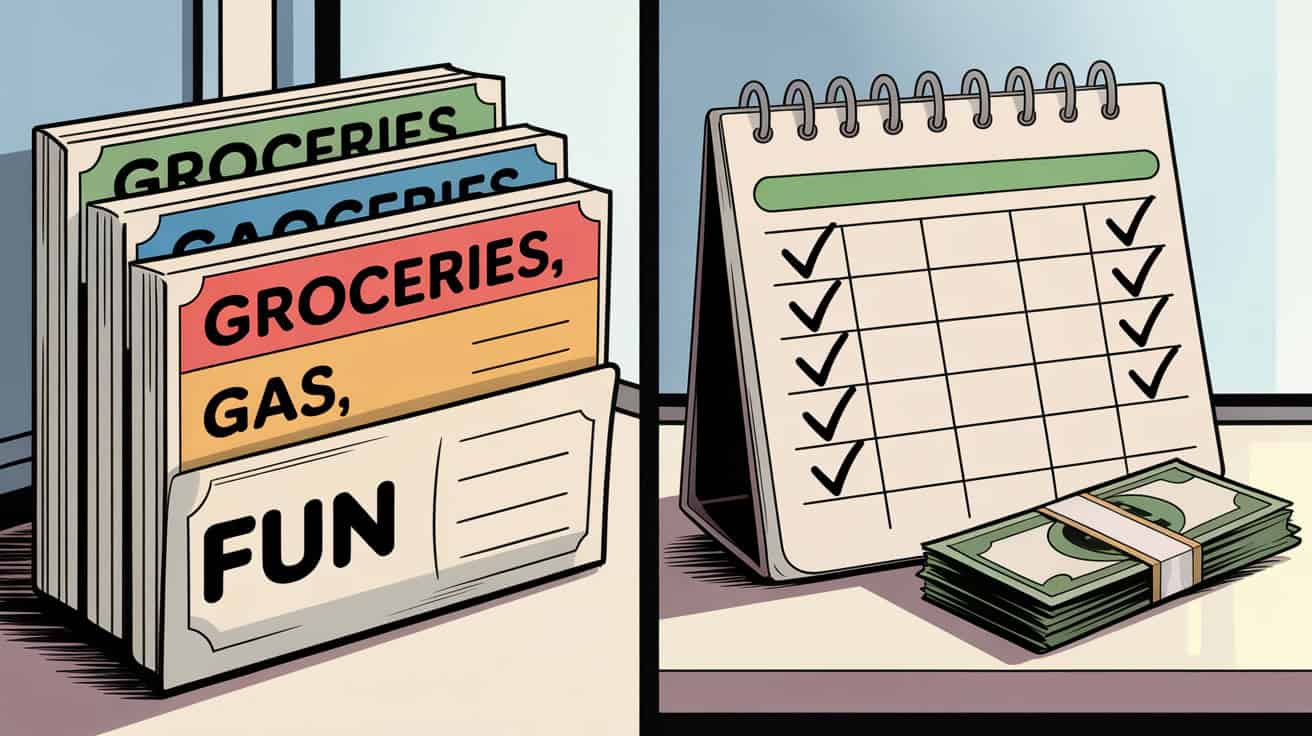
The Easier Approach Is: Sit down before the month begins and divide cash into labeled envelopes.
17. Keep Birthday Gift Money In Its Own Envelope
Birthday season can sneak up and strain the budget.
Here’s A Quick Way: Add a small amount monthly into a birthday envelope so it is ready when needed.
18. Use Cash Only For Personal Care Spending
Hair, nails, and small self care treats can grow without limits.
Instead, Try This: Set one personal care amount in cash and stop when it runs out.
19. Set A Clear Weekly Household Spending Cap
A weekly cap creates guardrails so spending does not drift.
If You’re Not Sure Where To Start: Look at last month’s average and lower it slightly for this week.
20. Store Extra Cash In A Locked Cash Box At Home
Keeping extra cash separate lowers the urge to grab it randomly.
To Make This Feel Less Heavy: Place overflow cash in a small locked box away from daily envelopes.
21. Review And Reset Cash Envelopes At The Start Of Each Month
A monthly reset keeps the system working instead of messy.
The Most Doable Way Is: Empty, count, and relabel each envelope on the first day of the month.
This gets easier if you use a monthly budget planner to see totals and reset every category in one place.
📌 SAVE IT FOR LATER! 📌
